
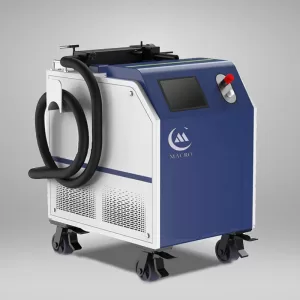
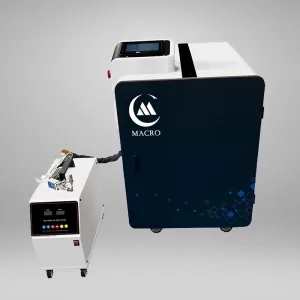
Compared to traditional welding methods, the core advantage of handheld laser welding lies in its combination of high precision and low heat input with the flexibility of manual operation; this yields significant advantages over processes such as argon arc welding, gas metal arc welding (GMAW/MIG/MAG), and resistance welding in terms of efficiency, quality, ease of operation, and overall cost.
⚡ Efficiency and Speed
The welding speed of handheld laser welding is typically 3 to 10 times that of traditional argon arc welding (TIG); this advantage is particularly pronounced when welding thin sheets, where speeds can be up to 10 times faster than TIG or MIG/MAG welding. Furthermore, as the weld seam is formed in a single pass with minimal spatter, little to no post-weld processing is required. This eliminates the time-consuming tasks associated with traditional welding—such as slag removal and spatter grinding—thereby further boosting overall production efficiency.
🎯 Welding Quality and Precision
Laser energy is highly concentrated, resulting in an extremely narrow heat-affected zone (HAZ); consequently, workpiece deformation is minimal, the risk of burn-through when welding thin sheets is low, and the original dimensional stability of the workpiece is effectively maintained. The resulting welds are smooth and uniform with minimal spatter; for materials such as stainless steel, the parts can proceed to the next stage of processing without the need for post-weld polishing. Furthermore, laser welding enables the creation of welds with high depth-to-width ratios and precise control over heat input, offering superior adaptability compared to traditional arc welding when joining highly reflective materials—such as aluminum alloys and copper—or dissimilar metals.
👨🏭 Ease of Operation and Flexibility
A significant reduction in the barrier to entry is one of the most prominent advantages of handheld laser welding. While traditional welding requires extensive practice to master the necessary skills, ordinary workers can become proficient after just one to three days of training, effectively alleviating the shortage of skilled welders. The handheld welding gun is lightweight and flexible, allowing for welding at any angle; it is particularly well-suited for scenarios that are difficult for traditional welding equipment to access, such as large structural components, complex internal cavities, and outdoor worksites.
💰 Total Costs and Energy Consumption
Although the initial investment in the equipment is relatively high, the long-term operational cost advantages are significant. The laser unit itself requires no consumables and is maintenance-free; the primary consumables are limited to protective lenses and a small amount of shielding gas. Compared to TIG/MIG welding, shielding gas consumption is reduced by 30–40%, and welding wire consumption by 10–15%. The system’s power consumption is only about one-eighth that of traditional argon arc welding; furthermore, due to its exceptionally high efficiency, the total electrical energy consumed to complete the same volume of work is generally lower.
💎 Summary
Handheld laser welding is not intended to completely replace all traditional welding methods; rather, it offers unparalleled comprehensive advantages in scenarios involving thin-to-medium gauge sheets, high requirements for precision and aesthetics, complex workpiece geometries, or the need for on-site operations. By lowering the operational barrier, enhancing efficiency and quality, and reducing the need for post-processing, it is reshaping welding practices within the metal fabrication industry.